By Clifford Ndujihe, Politics Editor
WITH the conclusion of primaries by political parties, three women have emerged as presidential candidates ready to challenge President Bola Tinubu of the All Progressives Congress, APC, for Nigeria’s topmost job.
Although 18 presidential flag bearers are on the prowl, only 14 will remain when the chips are down because 14 political parties are involved of which three have factional candidates. With three female candidates in 2027, which is 21.43 percent of 14 candidates, women are having their best outing in the history of presidential polls in Nigeria.
Although there were six female candidates in 2019, it amounted to 8.22 percent of the 73 standard bearers.
With more slots, it is to be seen if women will surpass the 157,560 votes secured by Mrs Sarah Jubril in 2003 and even go further to defeat President Tinubu.
The last three women standing; how women fared in past polls
The three women contesting the January 16, 2027 presidential election are Dr Esther Nkem Okereke of the National Rescue Movement, NRM; Mrs Anita Zugwai-Chukwu of the Young Progressives Party, YPP; and Ada Fredrick of the National Democratic Party, NDP.
Women were not on the radar in 1999, when only two candidates, General Olusegun Obasanjo of the Peoples Democratic, PDP, and Chief Olu Falae of the Alliance for Democracy, AD/All Peoples Party, APP, slugged it out with Obasanjo emerging the winner.
However, women were on the ballot in 2003, which so far remains their best attempt at occupying Aso Villa. Of the 20 presidential candidates, two were women(10 percent) – Mrs Sarah Jubril of the Progressive Action Congress, PAC, and Major Mojisola Adekunle Obasanjo, retd, of the Masses Movement of Nigeria, MMN. While Major Obasanjo polled 3,757 votes at that election, Mrs Jubril scored 157,560 votes, the highest any woman has ever got in a presidential election in the country.
Ever since, the fortunes of women have been dwindling at the presidential polls. In a pool of 27 candidates in 2007, there was only one woman(3.70 percent) – Major Obasanjo, who garnered a miserly 4,309 votes.
In 2011, with 63 political parties in which 20 parties fielded candidates, there was also only one woman(5 percent) – Ebiti Ndok of the United National Party for Development, UNPD, who polled 21,203 votes. Mrs. Sarah Jubril’s efforts to be on the ballot did not yield a dividend. She got one vote at the PDP presidential primary.
In 2015, the poor run of women continued. Mrs. Oluremi Sonaiya, was the only female in a crowd of 14 presidential standard bearers(7.14percent) and she got 13,076 votes.
In 2019, in a crowd of 73 presidential candidates, there were six women(8.22percent), the highest so far in the history of electioneering in Nigeria. However, the women fared badly polling altogether 25,594 votes in a contest that President Buhari scored 15,191,847 of the total votes cast while his closest opponent, Atiku Abubakar of the PDP got 11,262,978 votes, a victory margin of 3,928,869 votes.
The women who took part in the 2019 election were Mrs Oby Ezekwesili (ACPN, 7,223 votes); Angela Johnson (AUN, 1,092 votes); Olufunmilayo Adesanya-Davies (MAJA, 2,651 votes); Eunice Atuejide (NIP, 2,248 votes); Rabia Yasai Hassan Cengiz (NAC, 2,279); and Maina Maimuna Kyari (NPC, 10,081 votes).
In 2023, there was only one woman among 18 candidates(5.56percent) when Princess Chichi Ojei of the Allied Peoples Movement polled 10,613 votes.
Will women fare better next year?
Speaking on their ambition after picking the tickets of their various parties, Okereke, Zugwai-Chukwu and Frederick said they have the quality to make a difference if elected.
It’s time to end bad leadership – Okereke, NRM
Dr Esther Nkem Okereke, who emerged through consensus at the NRM national convention held in Abuja, ahead of two other aspirants, Ademola Joseph Onigbokun and Oluwadare Joseph Faduri, described her nomination as a sacred assignment and a call to service, promising to restore hope and rebuild the country, if elected.
She lamented the economic hardship in the country, saying millions were trapped in poverty, insecurity and economic uncertainty despite the nation’s vast resources.
She said many families still live without electricity, graduates remain unemployed, farmers cannot access their farmlands due to insecurity, and businesses are collapsing under harsh economic conditions.
“The truth must be told boldly: Nigeria today is battling systemic failure caused by poor leadership, corruption, selfishness and lack of vision,” she said.
Okereke criticised what she described as politics driven by the struggle for power rather than service to the people, adding that governance should be transformational and not transactional.
She, however, expressed optimism that Nigeria could overcome its challenges through courageous and purposeful leadership, saying: “We can build a nation where electricity is stable, businesses thrive, youths become innovators, and citizens live with dignity, opportunity and hope.”
The NRM candidate urged Nigerians to unite and work towards ending what she called the era of broken promises, adding that history would remember this period as a defining moment when Nigerians chose courage, unity and progress over fear and despair.
I’ll provide credible alternative – Anita Zugwai-Chukwu, YPP
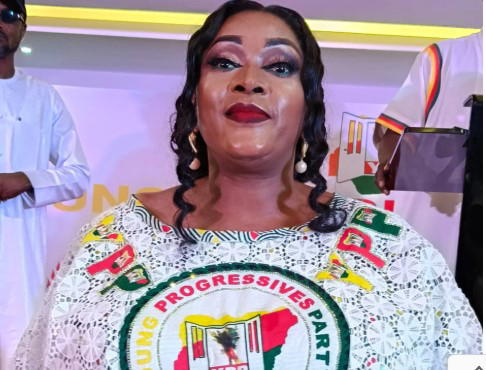
On her part, Mrs Anita Zugwai-Chukwu, who emerged as the YPP standard-bearer following consultations and endorsements by key organs of the party, including the National Executive Committee, NEC, and state chairmen from across the 36 states and the Federal Capital Territory, FCT, said she would provide a credible alternative.
In her acceptance speech, she thanked the leadership and members of the party for the confidence reposed in her, pledging to uphold the party’s ideals and work towards its growth and national expansion.
She acknowledged the challenges confronting the nation and said Nigerians were yearning for transparent, people-centred and progressive leadership.
“I am not unaware of the challenges before us as a nation and as a party. Nigerians are yearning for leadership that is transparent, people-centred and progressive.
“As the presidential candidate, my duty is clear. I will safeguard our party’s vision, uphold our constitution, and work closely with the National Working Committee and other stakeholders.
“Let me be clear: my personal ambition takes second place to the stability and growth of the YPP. I pledge my loyalty to the party, my fidelity to our ideals, and my total commitment to the unity of our members across all states.”
Zugwai-Chukwu expressed gratitude to party members and supporters across the country, describing the period ahead as a defining moment for both the party and Nigeria.
Nigeria needs empathetic leadership women could provide – Ada Frederic, NDP
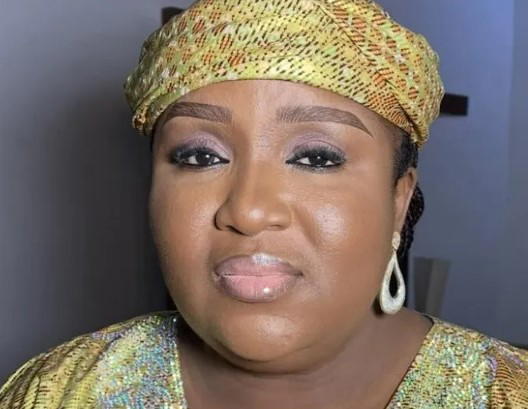
In like manner, Ada Fredrick described her emergence as NDP candidate as a huge responsibility, noting that the nation urgently required the empathetic leadership that women could provide.
“This responsibility is huge, but with God on our side, we will do our best. Nigeria has come a long way; a lot is happening, and we need women.
“At this point in our lives, we need great women who can speak out passionately and be heard. We will do our best to make sure we give Nigerians the light of hope and fulfill all the promises in our manifesto,” she said.
Frederick further stated that the party would soon unveil its full manifesto to the public, which would clearly demonstrate why the NDP remained the best political option for the country.
“I will not fail you, I will not fail my country. I will do my best as a woman, a mother and a sister.
“We are calling on Nigerian women and the youth to join hands with us to make Nigeria a better place for all of us,” she said in her acceptance speech.
Other candidates
Apart from Tinubu, the women will face other men such as former Vice President Atiku Abubakar/Dumebi Kachikwu of the African Democratic Congress, ADC; former President Goodluck Jonathan/Senator Sandy Onor of the PDP; former Anambra State Governor, Peter Obi of the Nigeria Democratic Congress, NDC; Omoyele Sowore(AAC); Gbenga Olawepo Hashim(Accord); Aliyu Bin Abass(ADP); and Kenndy Ahanotu/Dr Chibuzo Okereke(Labour Party); Oyo State Governor, Seyi Makinde(APM), former Cross River State Governor, Mr Donald Duke(PRP); and Adewole Adebayo/Abimbola Atanda(SDP).